
Summer Usage Precautions for Screw Jacks
2026-06-09 16:48:55
Click:
“
Summer brings high temperatures, humidity, and frequent rainstorms — all of which can significantly affect the performance and lifespan of screw jacks.
”
Summer brings high temperatures, humidity, and frequent rainstorms — all of which can significantly affect the performance and lifespan of screw jacks. To ensure safe and efficient operation, the following precautions should be taken seriously.
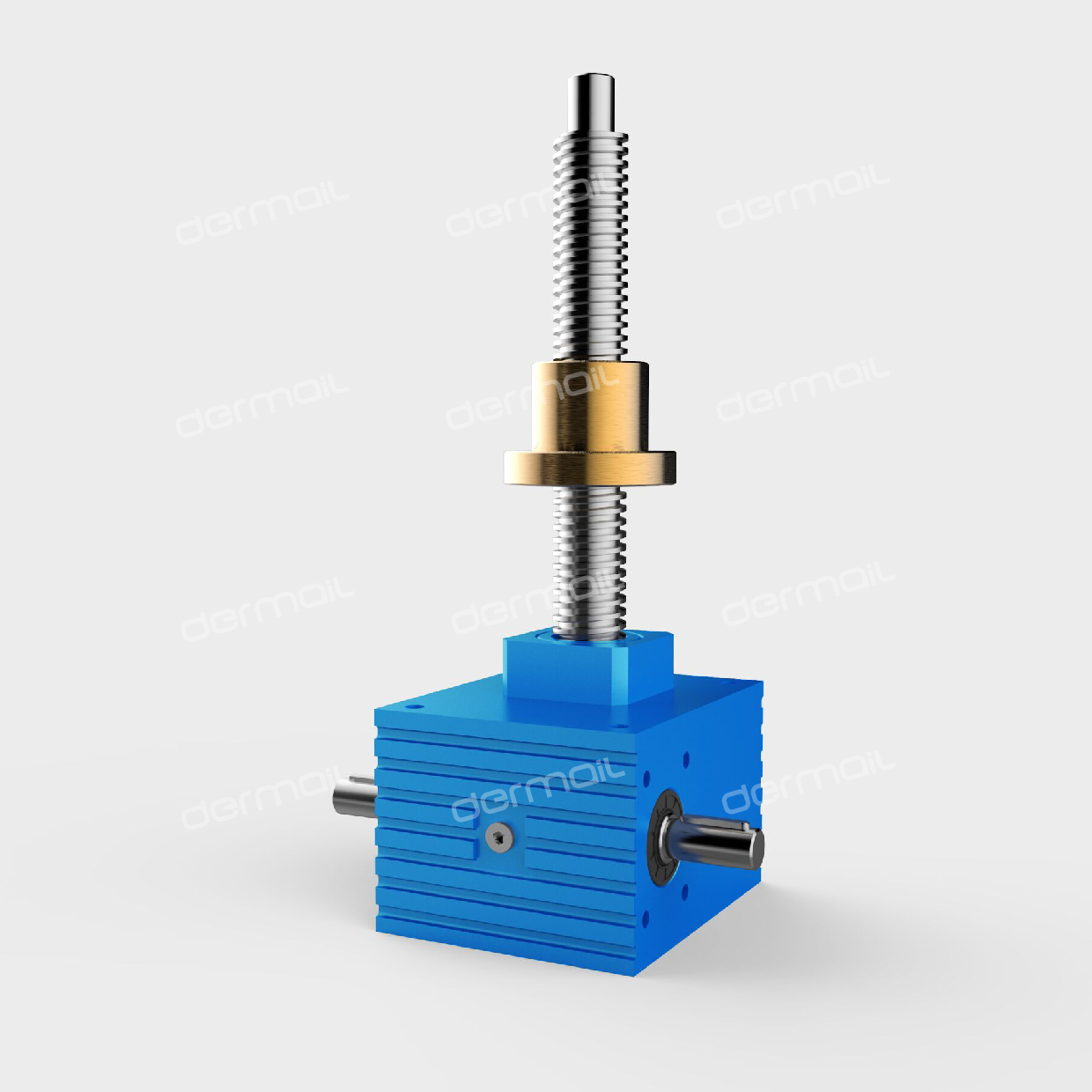
1. Monitor Operating Temperature
Screw jacks generate heat during operation due to internal friction. In summer, ambient temperatures often exceed 35°C (95°F), which compounds the heat buildup. Prolonged continuous operation under heavy load can cause overheating, leading to accelerated wear of the worm gear, reduced lubrication effectiveness, and even thermal deformation of components.
Recommendation: Limit continuous running time. Follow the manufacturer's duty cycle rating (typically 20–40% under heavy load). Allow adequate cooling periods between cycles. Install a temperature sensor if the jack operates in an enclosed space.
2. Upgrade Lubrication Management
Heat thins lubricants, and humidity can cause contamination. Standard grease may lose viscosity too quickly in summer, while moisture promotes rust and corrosion inside the housing.
Recommendation:
- Switch to a high-temperature-grade grease (e.g., NLGI Grade 2 with a dropping point above 180°C).
- Shorten the lubrication interval — inspect and re-grease every 250–500 hours instead of the standard 1,000 hours.
- Use grease with anti-corrosion additives in humid environments.
- Wipe the grease fittings clean before each re-lubrication to prevent dirt ingress.
3. Prevent Moisture and Corrosion
Summer rainstorms and high humidity are silent killers for dermail transmission's screw jacks. Water ingress into the worm gear housing dilutes lubricant and causes rust on the screw thread and gear teeth.
Recommendation:
- Ensure all breather plugs and seals are intact before the rainy season.
- Cover the jack with a waterproof tarp when not in use, especially outdoors.
- After exposure to rain, wipe the exterior dry and run the jack through several strokes without load to expel any moisture that may have entered.
- Apply a light coat of rust-preventive oil on exposed screw threads.
4. Watch for Thermal Expansion
Metal expands in heat. The screw, nut, and housing all expand at different rates, which can cause binding, increased friction, and reduced positioning accuracy.
Recommendation:
- Do not operate the jack at its maximum stroke limit during peak heat — leave a small margin.
- If precision positioning is critical, allow the jack to cool down to ambient temperature before making final adjustments.
- Check for any unusual noise or resistance, which may indicate thermal binding.
5. Reduce Load Where Possible
The load capacity of a screw jack decreases as temperature rises. A jack rated for 10 tons at 20°C may only handle 8–9 tons at 45°C due to lubricant breakdown and material softening.
Recommendation:
- Apply a derating factor of 10–20% in summer operations.
- Avoid sudden shock loads — they generate instant heat spikes that are especially dangerous in high ambient temperatures.
- If the application demands full capacity, consider using a larger-size jack or adding a cooling fan to the housing.
6. Inspect Seals and Boots Regularly
Rubber and polymer seals harden and crack faster under UV exposure and heat. A damaged boot lets dust and water into the nut, destroying the screw thread.
Recommendation:
- Inspect all dust boots and shaft seals weekly during summer.
- Replace any seal that shows cracking, shrinking, or deformation.
- Use UV-resistant boot material if the jack is installed outdoors.
7. Ventilation for Enclosed Installations
If screw jacks are mounted inside machine frames or enclosures, summer heat can trap warmth and create a thermal oven effect.
Recommendation:
- Install ventilation fans or heat sinks on the enclosure.
- Keep the enclosure door open during operation when safety permits.
- Monitor internal temperature — it should not exceed 80°C (176°F) at the worm gear housing.
Bottom Line
A screw jack is a precision mechanical device. Summer doesn't have to shorten its life — but it does demand more attention. The three enemies are heat, moisture, and overload. Control all three, and your screw jacks will perform reliably all season long.








Tel:+86-317-7369999
E-mail: demai@demai.org
Mobile:+86-18653450543 (Wechat)
Address:No. 6, Haihe Road, economic development zone, Wuqiao County, Cangzhou City, Hebei Province

点击右上角
分享给朋友吧
Copyright ©2023 All Rights Reserved Hebei Demai Transmission Machinery Co.,Ltd.
Copyright ©2025 All Rights Reserved Hebei Demai Transmission Machinery Co.,Ltd.
