
Screw Jacks vs Electric Actuators: Key Characteristics Compared
2026-05-14 10:51:01
Click:
“
I. Characteristics of Screw Jacks1. Massive Thrust — Built for Heavy LoadsThis i
”
I. Characteristics of Screw Jacks
1. Massive Thrust — Built for Heavy Loads
This is the most defining feature of a screw jack. It uses a two-stage reduction mechanism consisting of a worm gear and a lead screw, which delivers extremely high torque multiplication. Standard models can handle 2.5 tons to several dozen tons of thrust, and large custom-built units can even reach over a hundred tons. A relatively small motor can lift several tons or even tens of tons of weight — something an electric actuator simply cannot achieve.
2. Built-in Mechanical Self-Locking — No Drop on Power Loss
When a screw jack uses a trapezoidal (Acme) lead screw, it has inherent mechanical self-locking capability. This is not achieved through any electronic component but through the friction characteristics of the worm gear itself. The physical principle makes it impossible for the external load to back-drive the lead screw. In other words, even if the power is suddenly cut, the motor burns out, or all control wiring is severed, the load will remain perfectly stable in mid-air and will not fall. This feature is critically important in vertical lifting applications where people or valuable equipment are being supported. It is the jack's greatest safety advantage.
3. Slow but Extremely Stable Operation
The lifting speed of a screw jack is generally quite slow. Standard models typically operate at a few millimeters to a few dozen millimeters per minute. But it is precisely because of this slowness that the operation is incredibly smooth — no impact, no vibration. Once the load is lifted, it stays perfectly still, making it ideal for applications that require 'rock-solid holding.'
4. Relatively Low Efficiency — Noticeable Heat Buildup During Extended Use
The transmission efficiency of a trapezoidal lead screw is generally only around 30% to 50%. This means more than half of the motor's input energy is converted into heat. During prolonged continuous operation, the temperature rise can be quite significant, so heat dissipation must be taken into account. This is also one of the reasons why screw jacks cannot operate at high speeds — going faster would only generate even more heat.
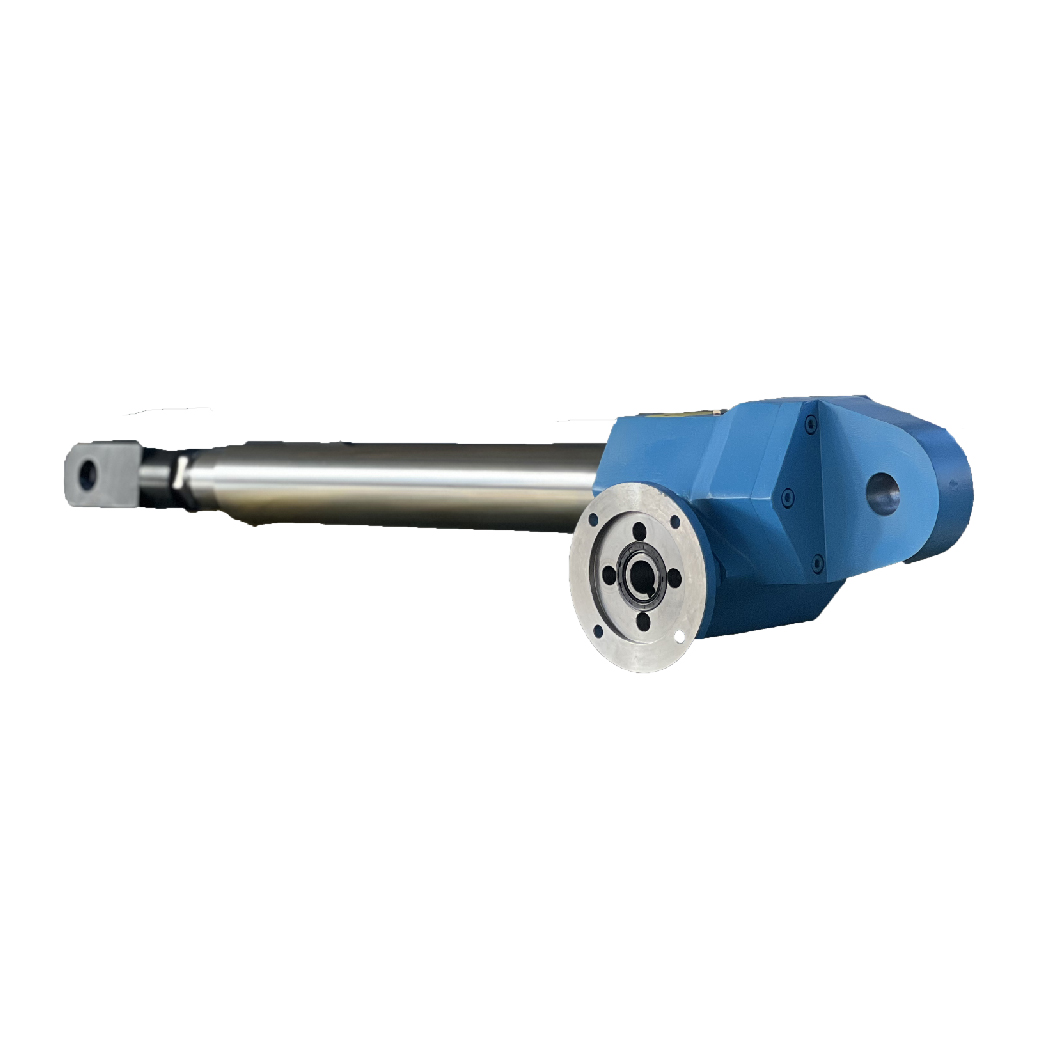
II. Characteristics of Electric Linear Actuators
1. Moderate Thrust — Designed for Light to Medium Loads
The thrust of an electric linear actuator generally ranges from a few dozen kilograms to about one or two tons. Anything over two tons is already considered a high-power model and comes at a significantly higher cost. It is not designed to carry heavy loads but rather to deliver light, fast, and frequent motion. Pushing a window, extending a sofa, or opening a small valve — it handles all of that with ease. But asking it to lift several tons would be pushing it far beyond its limits.
2. Fast Speed — Quick and Responsive
Speed is what electric actuators are all about. Under no-load conditions, they can reach speeds of several dozen millimeters per second. The motion is crisp — it starts and stops on command, instantly. This makes them perfect for applications requiring frequent reciprocating motion. For example, an electric window opener that needs to cycle dozens of times per minute is no problem at all for an electric actuator. A screw jack would overheat and shut down long before that.
3. High Efficiency — Minimal Heat Generation
Electric actuators typically use ball screws or planetary gear transmissions internally, with efficiencies reaching 60% or even higher. For the same motor power, more energy is converted into useful thrust rather than heat. As a result, they do not overheat easily during prolonged continuous operation, making them ideal for high-frequency work scenarios.
4. Weak Self-Locking — Risk of Sliding Back on Power Loss
This is the biggest drawback of electric actuators. Because they use ball screws, which have low friction and high efficiency, the flip side is that external forces can easily back-drive the screw. They rely primarily on a brake pad built into the motor to hold position. That brake pad has a limited lifespan and wears down over time. Once the power is cut, the brake can fail instantly, and the actuator will rapidly retract or extend under the force of gravity. Therefore, when used in vertical lifting applications, you must choose a model with self-locking capability or install an external braking device. Otherwise, there is a real safety hazard.
5. High Protection Rating — Strong Environmental Adaptability
Electric actuators come from the factory with a sealed housing. Their dust and water protection ratings typically reach IP54, IP65, or even IP66. They can be installed directly in outdoor, wet, or dusty environments without any additional protection. This is a significant advantage over screw jacks.
III. One-Sentence Summary of Each Product's Core Traits
The core characteristics of a screw jack are: massive force, self-locking, rock-stable, synchronizable — but slow, hot, and poorly protected. It is the 'heavy lifter' of the industrial world, built for tough, heavy, and safety-critical jobs.
The core characteristics of an electric linear actuator are: fast, lightweight, well-protected, and easy to integrate — but lower thrust and no self-locking. It is the 'dexterous hand' of the automation world, built for quick, light, and high-frequency tasks.
Neither product is universally better than the other — it all comes down to fit for purpose. Once you clearly understand how heavy your load is, how fast you need it to move, how critical safety is, and what kind of environment you are working in, the right choice becomes obvious.








Tel:+86-317-7369999
E-mail: demai@demai.org
Mobile:+86-18653450543 (Wechat)
Address:No. 6, Haihe Road, economic development zone, Wuqiao County, Cangzhou City, Hebei Province

点击右上角
分享给朋友吧
Copyright ©2023 All Rights Reserved Hebei Demai Transmission Machinery Co.,Ltd.
Copyright ©2025 All Rights Reserved Hebei Demai Transmission Machinery Co.,Ltd.
